Skip navigation

The river had dwindled to a series of pools connected by grassy land bridges full of wildflowers, broadleaf plants and blooming bushes. Each pool wore a different aspect. Most seemed clean and empty of thought, their blank surfaces rippling with each changing breeze. In some, a smoky murk obscured the depths in a fog of slow, swirling rumination. One sulked in stagnation and decay, releasing putrid-smelling bubbles. He happened on one pool that seemed to smile. Clear and shallow, it sprouted reeds and watercress. Pollywogs swam there, some small and lithe, others fat as toads, and all had hind legs. They clung to the reeds; their translucent, vibrating tails stirred tiny currents.

One of the pools, an inscrutable, impenetrably deep one, made a home for gigantic trout.

It was from this one, with what could only be a blessing from Iryla, that he was able to snare his supper. Yet it was this same pool, dark and sheltered, the greenery drooping over its banks, that stymied him, barring him from hard-won peace. For it was this pool that looked the most familiar. It was the image of the pool inside him, and he wanted to fling himself there and drown. The cool pool of despair. That it should be the pool to feed him was not even an irony, for was it not his despair sustained him? It was his despair that kept him sane on this walk through a life in which hope would be madness. He tried to share the thought with Drisal, but it only made his brother sad. He should have known this. For he was alone. Aershmela would mock such a sentiment. Cerel would have no patience for it, because he could not understand. Lara would listen and comprehend, but then she would argue with him that he did have hope, that hope was in the Duality, and that faith and hope would save him.

Only Theris would truly understand. Only Theris would not judge the observation as self-pitying. Only Theris would not try to fix it as Lara did; and only Theris would see the point of it without Drisal’s capacity to be hurt by what he saw.

He smiled, thinking of Theris, thinking that whenever he needed to talk to someone he could talk to his memory.

The fish was good. The breeze was gentle and the twisted roots beneath which he passed the night promised him no discovery.

Some days, I can’t see a way forward. This is one of those days. Climate is stressful. Future uncertain. I can’t bear the thought of going to work. I’m afraid of losing my job. I don’t know why, and I don’t know how long I can hang on. I need change.

What to do, what to do. Call my provider’s crisis line? My self-esteem is too low to consider wasting their time.

When this happens, I have a hard time finding the solution-oriented person I’ve learned to become after 50 years of this. So, grasping at straws, I bang my way through piano music, making it up on the spot sometimes, almost invariably some repetitive doom-laden lacrimose storm front in the key of A minor. I update my Linkedin in the hope of finding some sort of freelance work in case the worst-case scenario comes to pass, and everything in my profile looks amateur and stupid. I immerse myself in tasks around the house that are normally satisfying, but I’m still hyperventilating.

When these feelings overwhelm, I can’t help worrying. I can’t help worrying that I’m relapsing. This feels like a mixed-manic shitshow.

And watching the world around me, it seems evident that I’m not alone, that this is nothing special. But your life matters. Go ahead and call the crisis line, if you are in my boat.

National Suicide Prevention Lifeline: 800-273-TALK (8255)

NAMI Help Line: 800-950-6264

Visit www.nami.org for tons of resources.

I routinely experience rage at work. This particular time, it was at the words of a person, not the bleep of an analyzer, and I like this person very much, so I made an effort and kept it to myself (sort of); my abrupt departure from the room may have been a tell. This happened a little while back, but I’ve been thinking about it quite a lot.

I don’t even remember what the overall conversation was about, but the switch flipped when the co-worker put on their wisest face and said, “Everybody’s a little bipolar.” I looked at them. “No,” they said, looking even wiser. “I mean it.”

I work in a field that attracts social misfits, recluses, and scientific types with organized and exacting tendencies. Often, all in the same individual. We laugh, we suffer, we generally understand each other, and I know that no offense was meant. I said nothing, only got up and left. “Slacking in the break room,” and all that. So perhaps I overreacted.

Now I get that the word “bipolar” means two-sided. Everyone does have their two sides, their ups and downs. That might make one, in fact, “a little bipolar.” So they weren’t wrong. People living with bipolar disorder do not own the word. But it did hit a nerve. Because when the term is used casually, as a joke or an insult or to talk down about oneself, it references the disorder and contributes to stigma.

And it brought to the fore an even more common one, because I so often hear it: “I’m so OCD about this.” Every time I hear this, I swear that the next time someone says it, I’m gonna ask.

“Do you know what OCD stands for? You’re literally using a condition, which can ruin lives if severe enough or untreated, as a casual adjective. Worse, you’re using this adjective for a slight self-deprecation. You absolutely cannot do that.” Well, everyone, as it seems to me in the moment, does!

We have sensitivity trainings galore. About race, culture, gender, religion … why not about mental health? You wouldn’t say a company meeting is a pow-wow. How is it any more acceptable to say anyone is “OCD about” anything? I would argue that it is not. That’s misappropriation too. Besides being terrible grammar, once you spell it out.

Sure, I’m grinding on something here. There are probably many of us living with these challenges who don’t get offended by this language, or are inured to it, or use it this way themselves, because they can. But I suspect there are many others, like me, who are disturbed or triggered. Use of these terms in casual conversation seldom lands as complimentary. Think about that. It’s a symptom of the stigma, deeply entrenched.

I don’t think it would be a terrible idea to educate the workplace about use of these terms.

I have moved to the floor out of respect for an older woman who has arrived, a friend of the hostess. The cool of the brown carpet chills me, though at my back the woodstove throws heat which rises up and over me. The long, lustrous brown table, cluttered with fruit and nuts and wine and books and breads and beer, separates me from the man who brought me here. He is sprawled upon the couch opposite, the only male among the gathered poets, the whites of his eyes glowing between the dark curls of his hair and the bushy mustache, darker still.

I look around at the assembly, women all, of every age and description. Some are old and well-read, some seasoned writers; the young ones bring imagination instead of experience to their art. The smell of their wine is something I cannot escape, acute and heady like strong scented flowers. It makes me slightly dizzy.

I have not been to a gathering like this in too many years. Farm life has dulled the edge of my wit. Happiness and acceptance have made me a poor critic. I cannot impress these people, I think, nor even present myself as worthy to be among them.

It has been a long time since I gathered up words like branches and tossed them into huge, tousled piles for the sheer joy of their design, their many textures and shapes making a rat’s nest of forms and colors: iridescent purples, shrieking magentas, dried-out grays, with knobby joints like an old man’s knuckles, or skewer ends sticking out everywhere.

The young girl, who feels the need to clarify that she is not a Rastafarian—perhaps because of her vivid sweater of yellow and orange and green and red—heaves words together with luxurious abandon, bathing herself in in the sound and flash of light, in a glory of enthusiasm and innocence. They mean almost nothing to me, but the sensory experience of them thrills. She belongs here, with the word artists.

The older women, with their carefully written lines, convey in images and strong voices ideas so well-formed that I feel inarticulate. Ideas spark more ideas, criticisms spark inspirations, agreements, disagreements, leaving everyone full and helped. I say little.

Oh, I am keenly interested, but am rendered wordless. I am inspired, but I don’t belong. I write “that stuff–no offense.” I know long before my turn arrives that my visions have no place here. I would like to transcend my genre, but I feel I have to apologize for it. I feel like I need to defend it. I feel like these narrow-minded scholars could benefit so very much from fantasy, if they would only listen.

Like in Amadeus, “too many notes” becomes the accusation against me, but I laugh it off. I know there is a tendency in my work towards abundant description. I am not defensive about it. When I finish, they exclaim and clap.

When can I read this book? What happens, what does he do with the infant?

He names it, of course. If he doesn’t there would be no story, Karla observes. Karla is no dummy.

And here I am, explaining it. Alice wants to know how I can write that stuff. “This came to me when I was only ten, that is why it is the way it is. I write it because I have to.” Why do I write that stuff? “If I don’t, I go crazy.” Natural answers to reasonable questions.

That stuff. The label that sticks.
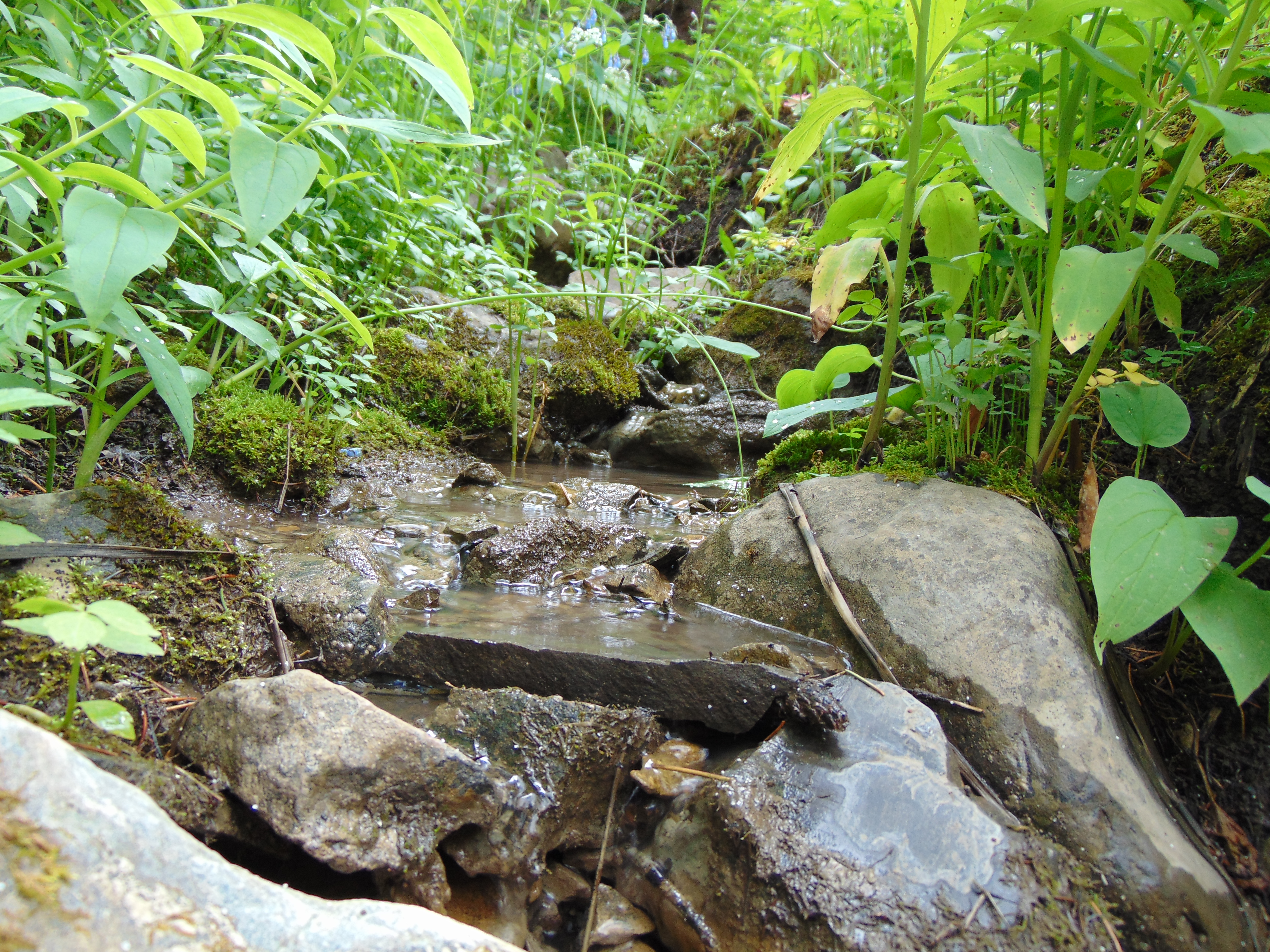
Feelings, feelings.

Oh, you can have feelings. Everyone has feelings. You aren’t unique.

The problem is, your feelings are valid, accepted, and even valuable right up until the moment you express them. First off, it’s inconvenient. Second, nobody cares. Third, if they do care, they think it’s unjustly directed at them. Fourth, if you mourn what you have lost, they say you are ungrateful for what you have. You must be judged and corrected.

Well, you have quite a persecution complex, don’t you?

You are sitting on my stump. Under the cloud shading the aspen trees. It’s always the place I sit. You’ve known this for years.

Why? Why are you here? This is my sky. This is my sun! It’s supposed to be sunny here. You’ve appropriated this stump for rumination and shadows. You should be ashamed.

Nature can be worshipped many ways. No one owns the Solstice.

You don’t understand how the flies are eating me alive because of you.

That’s because you never get bothered by insects. Some of us are quite used to it.

“You know, everyone’s a little bipolar,” she said to the gathering, while looking at one. Her face, so earnest, its wrinkles and eye-bags smoothed to impart her wisdom. “I’m serious.”

The one looked at her startled, with a word-bitten stare, for only a moment. Then, she turned away with her scarred arms, turned away before it was too late, swallowed by churning entrails boiling in a giant kettle.

She could not remember if she had even said, “Hmm,” before turning. It’s uncivilized to take offense, and all that.

“I’m not ungrateful! I’m not! I smile at the trees because they are pretty. I greet all the passers-by, though I’m not sure of faces and my enemy could be one of them. To make the passage gentler, less damaging, more content. I imagine happiness for all. It feels like a dream, clawing up from despair, because I know I will never bring them up with me once I arise. No one follows me, down or up.”

“What is that noise? What is that gawdawful perishing noise? Stop making it right now.”

“I can’t be given a rest.”

“Why should you? You’re being an idiot.”

“Yes, I am an idiot. Finish your laughter and leave me.”

“Why are you lying there on the rocks when the ground is soft right over there?”

The sun in the trees. The aspens glittering while the black clouds move over them. The robin. The elbow-high mountain grass. The flowers: purple penstemon, pale geraniums, red paintbrush, lavender daisies, and the sound of water are here.

One need not be looking for sorrow to find sorrow One need not be looking for joy.

I waited too long.

The air was still then, still as the light, still as the light tilts to pale pink, to pale yellow, to the color of peaches that ripen the evening, tug at the memory, and then fade to darkness and death.

The air was still then, still enough for what I must do, still, and still I know not how or what.

I step out finally, looking. Not for sorrow, not for joy. I step out to find the stillness has ended. The winds have arisen and begun already to push ahead the sun, the warmth, the light itself.

I have stepped into the awakening storm.

Sometimes, bipolar depression can bring despair such that it wants to feed itself. My struggle in particular has to do with aging, and the realization that all the time I lost in my 30s between destructive choices and actions during acute mania, and paralyzing depression have very probably robbed me of the ability to fulfill one of my most important goals during my remaining lifetime.

Whatever the trigger, it is almost impossible at times to do what one knows is necessary to regain a handle on mental health. Such as time spent in nature. God’s amazing creation, Mother Earth, however you name it, provides one of the most healing, grounding experiences ever.

It’s very difficult to start without momentum.

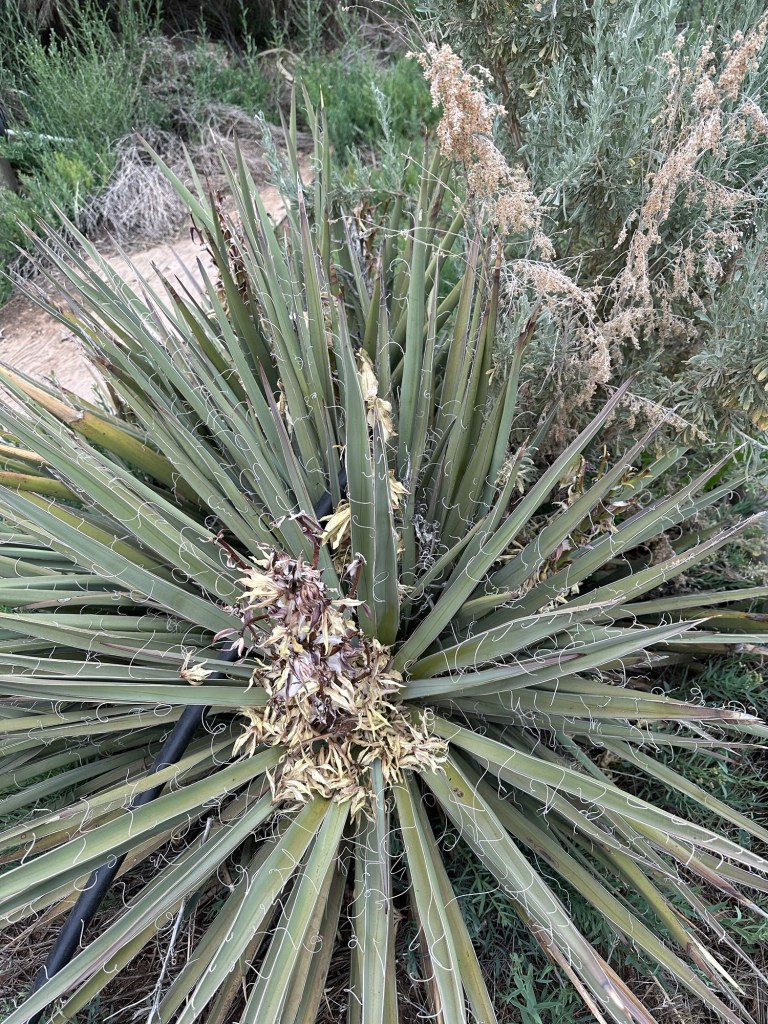
This first image illustrates the cost of despair. I missed the blooming of the yucca. But I kept walking.

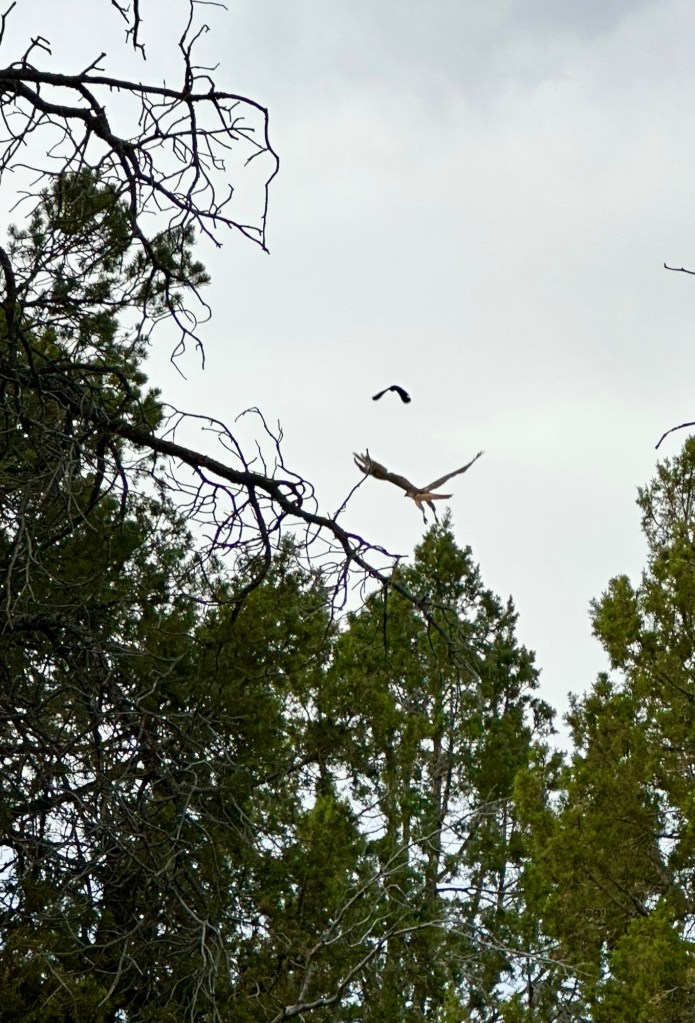
This second image shows what can be gained by forcing that first step.

So painful to step out the door. But it is a beginning.

Funny Scene from Supernatural

youtu.be/3su6hUqf6CE

Despair sounds a lot like self-pity when voiced. They are not the same, but the only thing with a chance to banish either is Will. It’s remarkable, though, how brutally despair chips away at Will. The beating never ends.

It is said by the fortunate that gratitude banishes both despair and self-pity. But forced gratitude is empty, and visceral realization of this leads to self-hatred. Felt gratitude is satisfying in the moment. But true hopelessness is a morass that, even if one is encouraged by gratitude, cannot be escaped with something so ephemeral. No ideal can be achieved without Will.

Without Will, it is impossible to continue trying, while knowing for a fact that success is unachievable, knowing for truth that the goal is unreachable, knowing for certain that the loss is assured.

So why Will? No reason, both logic and despair declare. They pummel it down to lower case. Doesn’t will, like hope, merely prolong suffering?

Of course it does. But will has more dignity. Hope victimizes in the end, while will plows through the gauntlet, understanding its own futility on the march toward, and upon reaching, inevitable failure and death.

This article is very basic but has nuggets. My main complaint about it is that it says nothing about Depakote.

http://www.webmd.com/depression/how-different-antidepressants-work?page=3

Hope you enjoy it. 🙂

mgmasoncreative.wordpress.com/

Freelance writer and video editor, and indie author

Inventing Reality Editing Service

Professional, Affordable Book Editing

Hiria Dunning

kaituhi // author, playwright, game writer

Writer Beware

Shining a small, bright light in a wilderness of writing scams

Living with Intent

Liberate from convention and live with extraordinary intention

The Bipolar Dance

My journey from hell and back and back again with bipolar disorder

not enough tissues for issues

Something's got to give......

A Christian Overcomer

My Human Journey to God

Werner Nokota Horses

Bluebell Ranch Sweden

maggiemaeijustsaythis

through the darkness there is light

Spring Creek Basin Mustangs

Tracking the Wild Horses of Spring Creek Basin